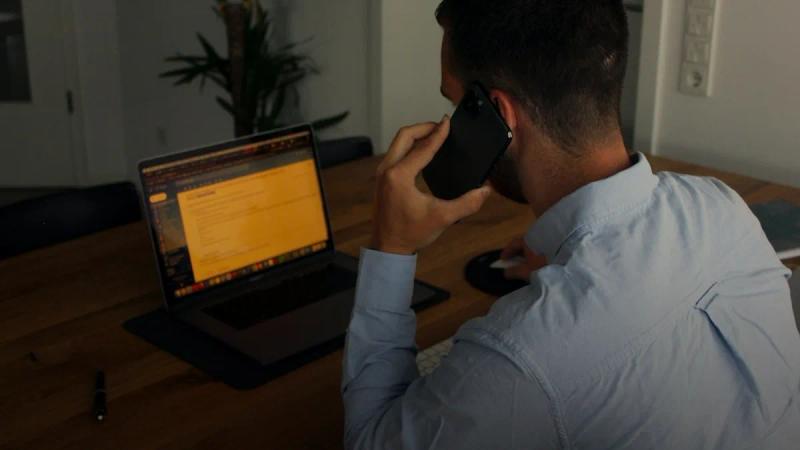

Phone Tag Is Costing Small Businesses More Than They Think
The 30-second version
Phone tag happens when callers and businesses keep missing each other on voicemail. For small businesses, it is not a minor annoyance — it is lost bookings, lost referrals, and lost reviews from customers who never became customers. Home services, medical practices, salons, law offices, and restaurants are hit hardest because one person cannot answer calls and do their job at the same time. The fix is answering every call on the first ring, every time. An AI receptionist like Ahoya does exactly that — 24/7, no voicemail loop, no callback queue.
In this article
- 01The Hidden Cost of Phone Tag
- 02How Phone Tag Affects Small Businesses
- 03The Top Industries Affected by Phone Tag
- 04Breaking the Phone Tag Cycle with Automation
- 05The Benefits of Implementing a Virtual Receptionist
- Phone Tag vs. AI Receptionist: A Quick Comparison
- 06How Businesses Typically Break the Phone Tag Cycle
- 07Taking Control of Your Bookings: Next Steps
Phone tag is what happens when two parties keep leaving voicemails for each other without ever actually connecting. One person calls, gets voicemail, leaves a message. The other calls back, gets voicemail again. Back and forth it goes — sometimes for days — until one party gives up and books with a competitor instead. It sounds like a minor inconvenience. For small businesses, it is quietly one of the most expensive habits they never notice they have.
The Hidden Cost of Phone Tag#
Every unanswered call is a decision point for the caller. Most people will not wait. They will move on to the next result on Google, call a competitor, or book online somewhere else if they can. The business that answers first usually wins the job.
The cost is not just the single booking you lost. It is the lifetime value of a customer who never became a customer. It is the referral they would have sent. It is the five-star review that never got written. A practice that misses even a handful of calls a week will feel that loss compound quickly.
Phone tag also has a less obvious cost: staff time. When your front desk or office manager spends part of their day returning calls that go unanswered again, that is time not spent on the customers already in front of them. It creates a loop of reactive work that crowds out everything else.
How Phone Tag Affects Small Businesses#
Small businesses are especially exposed to phone tag for a simple reason: they rarely have a dedicated person whose only job is to answer the phone. The owner is on a job site. The receptionist is checking in a patient. The stylist is mid-appointment. The phone rings, nobody picks up, and the caller moves on.
Here is what that loop typically looks like in practice:
- A caller finds your business through Google or a referral
- They call during business hours but reach voicemail
- They leave a message — or they do not
- You call back an hour later and get their voicemail
- They call again the next morning and reach voicemail again
- By day two, they have already booked with someone else
Even when the caller is patient enough to wait, the back-and-forth erodes confidence. It signals that your business may be hard to reach, which makes people wonder what it will be like to work with you once they are a customer.
The Top Industries Affected by Phone Tag#
Phone tag hits hardest in service businesses where appointments are the primary revenue driver and calls come in unpredictably throughout the day.
Home services — HVAC companies, plumbers, electricians, and landscapers often work in the field all day. Calls come in while technicians are under a sink or on a roof. After-hours emergency calls go straight to voicemail.
Medical and dental practices — Front desk staff handle check-ins, insurance questions, and billing while the phone rings. New patients calling to schedule a first appointment are the most likely to hang up and try a different practice.
Salons and spas — Stylists and estheticians cannot step away mid-service. A client asking to book a color appointment at 7 p.m. on a Tuesday gets voicemail, and the booking never happens.
Law offices — Prospective clients calling about a legal matter are often anxious. If they cannot reach someone quickly, they interpret the silence as a lack of urgency and call the next attorney on their list.
Restaurants — Reservation requests, catering inquiries, and event bookings all require a real conversation. If the host stand is slammed during dinner service, those calls pile up unanswered.
In every one of these cases, the business is not failing to answer because it does not care. It is failing because one person cannot be in two places at once.
Stop Losing Bookings to Voicemail
Start Free TrialBreaking the Phone Tag Cycle with Automation#
The most direct fix for phone tag is ensuring that every call gets answered on the first ring, every time, regardless of what else is happening in the business. That used to mean hiring a full-time receptionist or paying for a traditional answering service. Both options work, but they come with real costs and limitations — limited hours, human error, and the need to train someone on your specific business.
AI-powered call answering changes the equation. An AI receptionist answers every call immediately, handles common questions, books appointments directly into your calendar, and texts your team with a summary of what was discussed. There is no voicemail loop. There is no callback queue. The caller gets what they need on the first call, and you get a booked appointment without lifting the phone.
The setup process matters here too. A tool that takes weeks to configure and requires a dedicated IT person is not realistic for a small business. Ahoya sets up from your website URL in minutes on a real phone number. The system reads your site, learns your business, and is ready to answer calls the same day.
The Benefits of Implementing a Virtual Receptionist#
A virtual receptionist does more than just answer calls. When it works well, it changes the rhythm of your entire operation.
Bookings happen around the clock. A caller who finds your business at 9 p.m. can book an appointment right then. 24/7 call answering means you capture demand that used to evaporate overnight.
Your team stays focused. When the phone is handled, your staff can give full attention to the customers already in front of them. That improves the in-person experience and reduces the frantic, split-attention feeling that comes with a constantly ringing phone.
No booking falls through the cracks. Every call is logged. Every request is recorded. Your team gets a text summary so nothing gets missed even if they are busy when the call comes in.
Callers get a consistent experience. An AI receptionist does not have a bad day, does not put callers on hold for ten minutes, and does not forget to mention the new patient special or the seasonal promotion.
Phone Tag vs. AI Receptionist: A Quick Comparison#
| Phone Tag | AI Receptionist | |
|---|---|---|
| Availability | Business hours only | 24 hours a day, 7 days a week |
| First response | Voicemail, then a callback queue | Answered on the first ring |
| Booking speed | Hours or days | Immediate, same call |
| Staff impact | Interrupts existing work | No interruption — team gets a text summary |
| Missed opportunity risk | High — caller moves on | Low — caller books before hanging up |
How Businesses Typically Break the Phone Tag Cycle#
It helps to think through what this looks like in practice for specific business types.
Consider an HVAC company where most missed calls come in after 5 p.m. A homeowner's air conditioning fails on a summer evening. They call the first HVAC company they find. Nobody answers. They call the second. Same result. The third has an AI receptionist that picks up immediately, confirms the service area, and books a next-morning appointment. The first two companies call back the next morning — but the job is already gone.
Consider a dental practice where the front desk handles check-in, checkout, and insurance verification simultaneously. A new patient calls at 10 a.m. to schedule a cleaning. The line is busy. They leave a voicemail. By the time the front desk calls back, the patient has already booked at a practice down the street that answered when they called.
Consider a salon where the owner is the only stylist on Tuesdays. She is booked solid from open to close. A client calls at noon to book a balayage appointment. The call goes to voicemail. The client texts a friend for another recommendation instead. The salon never knew the booking was possible.
In each scenario, the business did not lose the customer because of price or quality. It lost the customer because it was not reachable at the moment the customer was ready to commit.
Taking Control of Your Bookings: Next Steps#
Phone tag is not an inevitable cost of running a small business. It is a solvable problem, and the solution does not require hiring more staff or overhauling your operations.
The starting point is understanding where your calls are going unanswered. Check your voicemail volume over the past two weeks. Look at what time those calls came in. If a pattern emerges — evenings, lunch hours, your busiest service windows — that is where you are losing bookings.
From there, the question is whether your current setup can cover those gaps. If you are relying on voicemail and callbacks, it probably cannot. A virtual receptionist built for small businesses can close that gap without adding headcount.
Ahoya is an AI voice receptionist built specifically for small businesses in home services, medical and dental practices, salons and spas, law offices, and restaurants. It answers every call 24/7, books appointments, logs requests, and texts your team — all set up from your website URL in minutes on a real phone number. Plans start at $49 per month, and there is a free trial so you can see how it handles your actual calls before committing.
Phone tag will keep costing you bookings for as long as you let it. The fix is simpler than most business owners expect.
Frequently asked questions
What is phone tag and why does it hurt small businesses?
Phone tag is the back-and-forth cycle of missed calls and voicemails between a business and a caller. For small businesses, it is costly because most callers will not wait — they move on to a competitor. Beyond the lost booking, the business also loses the customer's lifetime value, referrals, and reviews they would have generated.
Which industries lose the most business to phone tag?
Home services, medical and dental practices, salons and spas, law offices, and restaurants are most affected. In each case, the person who should answer the phone is already doing something else — on a job site, mid-appointment, or handling a packed waiting room. Calls go to voicemail and callers move on before anyone calls back.
How does an AI receptionist stop the phone tag cycle?
An AI receptionist answers every call immediately, handles common questions, books appointments into your calendar, and texts your team a summary. There is no voicemail loop and no callback queue. The caller gets what they need on the first call, and the business captures the booking without anyone having to pick up the phone.
Can a small business set up an AI receptionist quickly?
Yes. Ahoya sets up from your website URL in minutes on a real phone number. The system reads your site, learns your business, and is ready to answer calls the same day. There is no lengthy configuration process or IT support required.
What does a virtual receptionist cost compared to hiring staff?
Ahoya starts at $49 per month after a free trial, with plans at $179 and $399 per month depending on call volume and features. That is a fraction of the cost of a part-time hire, and unlike a human receptionist, an AI answers calls 24/7 without sick days, training time, or inconsistent performance.
Written by
Ahoya Team
Ahoya editorial
Never miss another customer call
Ahoya answers every call, books appointments, and texts your team — set up from your website in minutes.
Get new playbooks by email