
AI Receptionist vs Voicemail: Which Wins for Small Business?

The 30-second version
Voicemail is passive. It catches calls but cannot book appointments, answer questions, or notify your team. An AI receptionist does all three — around the clock. A caller at 9 p.m. on Sunday gets a real response, picks a time slot, and hangs up with a confirmed booking. Your team sees it Monday morning. For home services, dental offices, salons, and restaurants, that difference is often the gap between winning a job and losing it to a competitor who answered.
In this article
- 01The Limitations of Voicemail for Small Businesses
- 02How AI Receptionists Can Boost Appointment Booking Rates
- 03Key Differences Between AI Receptionists and Voicemail
- 04The Role of AI in Providing 24/7 Call Answering Services
- 05Real-World Examples of AI Receptionists in Action
- 06Why Small Businesses Are Making the Switch to AI Receptionists
- 07Maximizing Small Business Growth with AI-Powered Appointment Booking
An AI receptionist is software that handles incoming calls and books appointments automatically. Unlike voicemail, which records a message and waits, an AI receptionist listens, responds, and acts — confirming a booking, logging a request, or texting your team — without a human picking up the phone. For small businesses where every call is a potential job, that difference matters.
The Limitations of Voicemail for Small Businesses#
Voicemail feels like a safety net, but it functions more like a holding pen. A caller leaves a message, hangs up, and immediately starts looking for someone who will actually answer.
Think about your own behavior as a consumer. If you call a plumber at 7 p.m. and reach voicemail, do you leave a message and wait? Or do you scroll to the next result?
Most people try again. Every unanswered call is not just a delayed conversation — it is an opportunity handed to a competitor.
Voicemail has specific problems that compound over time:
- No real-time response. Callers get silence, not help. No confirmation, no next step, no reason to stay.
- Callback lag. Even if you return every call within an hour, many callers have already booked elsewhere.
- After-hours dead zone. A large share of calls come in outside business hours. Voicemail catches them; it does not convert them.
- No booking capability. Voicemail cannot check your calendar, offer time slots, or confirm an appointment. It just records words.
- Message fatigue. When a voicemail inbox fills up or callbacks fall behind, messages go unreturned entirely.
For a home services company, a dental office, or a salon, a practice that misses even a handful of calls a week is leaving real revenue on the table.
How AI Receptionists Can Boost Appointment Booking Rates#
The core job of a receptionist — human or AI — is to turn an interested caller into a confirmed appointment. Voicemail cannot do that. An AI receptionist can.
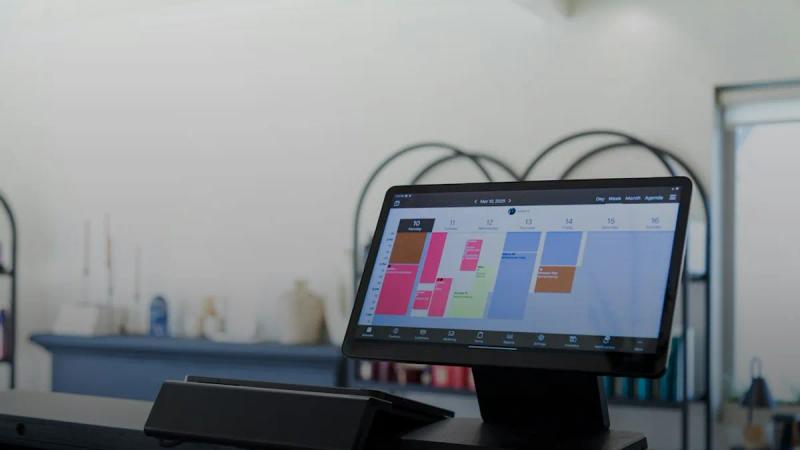
Here is what the process looks like in practice. A caller rings your number at 9 p.m. on a Sunday. The AI answers immediately, greets the caller by your business name, and listens. The caller says they need a haircut on Tuesday afternoon. The AI checks your available slots, offers two options, confirms the one the caller picks, and wraps up the call. Your team wakes up Monday morning with a new appointment already on the books.
That is appointment booking handled end to end, without anyone on your staff lifting a finger.
The AI also handles calls that do not end in a booking — a question about pricing, a request for directions, a callback request — and logs every interaction so nothing slips through.
Key Differences Between AI Receptionists and Voicemail#
| Feature | Voicemail | AI Receptionist |
|---|---|---|
| Answers live | No | Yes |
| Books appointments | No | Yes |
| Available 24/7 | Technically, but passively | Yes, actively |
| Texts your team | No | Yes |
| Logs caller details | No | Yes |
| Responds to questions | No | Yes |
| Setup time | Minutes | Minutes |
| Monthly cost | Near zero | From $49/month |
The cost column is worth pausing on. Voicemail is cheap. But if a virtual receptionist converts even one or two additional jobs per month that voicemail would have lost, it pays for itself.
The Role of AI in Providing 24/7 Call Answering Services#
Most small businesses are not staffed around the clock. That is normal. But your customers do not stop needing things when your office closes.
Stop Losing Jobs to Missed Calls
Start Free TrialA homeowner notices a leak on a Saturday evening. A patient wants to book a follow-up after reading discharge notes at 10 p.m. A caller wants to confirm a reservation for a party of twelve before they go to sleep. These calls happen outside business hours constantly.
24/7 call answering means your business is reachable at those moments — not with a recording that says "leave a message," but with a system that actually helps. The caller feels taken care of. Your business gets the booking. Nobody had to stay late.
This matters most in industries where urgency drives decisions. A caller who needs an emergency HVAC repair is not going to wait until 9 a.m. The business that answers — even with an AI — wins that job.
Real-World Examples of AI Receptionists in Action#
Consider a few scenarios where an AI receptionist changes the outcome.
Home services. A roofing company runs weekend ads when the owner is not in the office. Calls hit voicemail and go cold. With an AI receptionist, those calls get answered, the caller's address and job type get logged, and the team gets a text. By Monday, there is a list of warm leads ready to confirm.
Medical and dental offices. A dental practice gets a wave of calls right after lunch when the front desk is occupied with check-ins. Instead of putting callers on hold or sending them to voicemail, the AI handles overflow — answering insurance questions, booking cleanings, and sending confirmations.
Salons and spas. A salon owner is mid-appointment and cannot answer the phone. A caller wants to book a color service for next Saturday. The AI books it, confirms the time, and the owner sees the new appointment when she checks her phone between clients.
Restaurants. A busy restaurant gets reservation calls during the dinner rush when every staff member is occupied. The AI takes the details, confirms the time and party size, and logs it — no missed bookings, no frustrated callers.
In each case, the missed-call text-back feature ensures that if a call ends without a booking, the team gets notified immediately so they can follow up while the lead is still warm.
Why Small Businesses Are Making the Switch to AI Receptionists#
The shift is not about replacing people. Most small business owners are not trying to eliminate staff — they are trying to stop losing jobs because nobody picked up the phone.
A few reasons the switch makes practical sense:
Hiring is hard. Finding a reliable receptionist, training them, and keeping them is time-consuming and expensive. An AI receptionist is set up from a website URL in minutes, runs on a real phone number, and does not call in sick.
Consistency matters. A human receptionist has good days and bad days. An AI answers every call the same way — politely, promptly, and completely.
Scaling is seamless. If call volume doubles during a busy season, the AI handles it without overtime or additional headcount.
The setup bar is low. Tools like Ahoya let you get a working AI receptionist live in minutes. You point it at your website, it learns your business, and it starts answering calls on a real phone number the same day.
For small business growth, removing friction from the first point of contact — the phone call — is one of the highest-leverage changes an owner can make.
Maximizing Small Business Growth with AI-Powered Appointment Booking#
Booking an appointment is not the end of the value chain — it is the beginning. Every confirmed appointment is a customer relationship, a potential review, a referral, and repeat business. When voicemail lets those opportunities slip, the damage compounds quietly over months and years.
An AI receptionist addresses this at the source. It answers every call, books every appointment it can, logs everything it cannot, and keeps your team informed in real time. Fewer gaps in your schedule, fewer cold leads, fewer mornings spent calling people who have already moved on.
Ahoya is built for small businesses in home services, medical and dental practices, salons and spas, law offices, and restaurants. It answers every call 24/7, books appointments, logs requests, and texts your team when something needs follow-up. Setup takes minutes — give it your website URL, it gets a real phone number, and it is ready to go. Pricing starts at $49 per month, with a free trial so you can see how it works before committing.
If your current system is voicemail, the question is not whether an AI receptionist is better at booking jobs. It clearly is. The question is how many jobs you want to stop losing before you make the switch.
Frequently asked questions
What is the main difference between an AI receptionist and voicemail?
Voicemail records a message and waits for someone to call back. An AI receptionist answers live, responds to the caller's questions, books appointments, logs details, and texts your team — all without a human picking up. The caller gets help immediately instead of a prompt to leave a message.
Can an AI receptionist actually book appointments without human help?
Yes. An AI receptionist can check available time slots, offer options to the caller, confirm the one they choose, and log the booking — end to end. Your staff sees the confirmed appointment without having to return a call or play phone tag.
How much does an AI receptionist cost compared to voicemail?
Voicemail costs close to nothing. Ahoya's AI receptionist starts at $49 per month. The practical question is whether the AI converts enough additional bookings to cover that cost. For most small businesses, one or two extra jobs per month is enough to make it worthwhile.
Is an AI receptionist useful for after-hours calls?
That is where it matters most. A large share of calls come in outside business hours — evenings, weekends, early mornings. An AI receptionist answers those calls actively, not just with a recording. Callers who need urgent help, like an HVAC repair on a Saturday night, get a response instead of a voicemail prompt.
Which types of small businesses benefit most from an AI receptionist?
Home services, medical and dental offices, salons and spas, law firms, and restaurants see the clearest benefit. These businesses get high call volumes, often during busy periods when staff cannot answer, and lose bookings when calls go unanswered. An AI receptionist handles overflow and after-hours calls so no opportunity slips through.
Written by
Ahoya Team
Ahoya editorial
Never miss another customer call
Ahoya answers every call, books appointments, and texts your team — set up from your website in minutes.
Get new playbooks by email